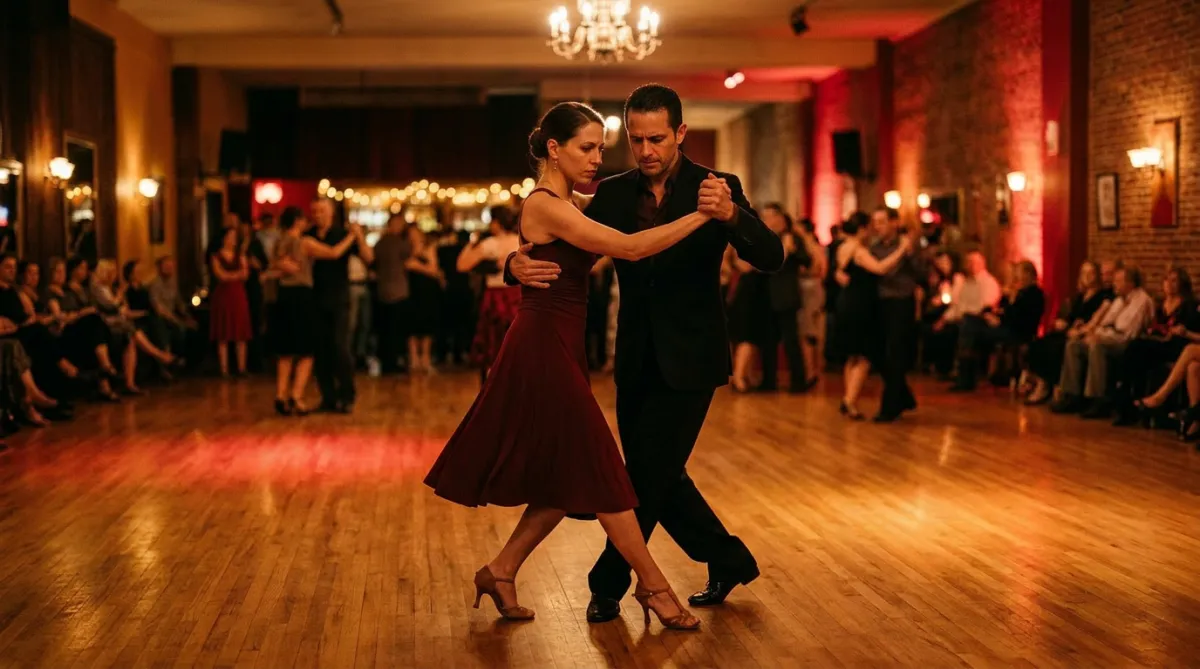
Dancing Through the Four Stages of Competence
Dancing Through the Four Stages of Competence
Why Tango Feels Hard — and Why That’s Exactly When You Should Stay With It
If you’ve ever left a tango class or a milonga thinking,
“Why does this suddenly feel so hard?”
you’re not alone.
In fact… you’re right where you’re supposed to be.
Tango has this way of pulling you in at the beginning. You learn to walk, maybe do a few ochos, maybe even dance a full tanda, and it feels kind of magical. Like, oh… I can do this.
And then — a few months in — something shifts.
The Part Nobody Warns You About
Suddenly, you start noticing things.
Your balance isn’t as consistent as you thought.
Your lead doesn’t always land the way you intended.
Your connection comes and goes.
Your partner is responding… but not always in the way you expected.
And it can feel like you’re getting worse.
You’re not.
You’re becoming aware.
A Quick Detour (Because I Love This Stuff)
There’s this concept called the four stages of competence — and yes, I’m also going to sneak in my favorite: the Dunning-Kruger effect
At the beginning, we’re in that stage of not knowing what we don’t know. Confidence is high because the surface feels manageable.
Then, as we start to actually see what’s happening… confidence dips.
That’s not a problem.
That’s the moment learning actually begins.
Stage 2: Where Most Tango Dancers Panic
This stage — conscious incompetence — is where tango gets humbling.
You can feel the difference between what you want to happen and what actually happens.
And here’s the important part:
This does not mean you’re a bad dancer.
It means you’re a more perceptive one.
You’re noticing connection.
You’re noticing timing.
You’re noticing your partner.
You’re noticing tango.
Why This Stage Matters So Much
This is the stage where tango stops being about steps
and starts being about how you move.
How you connect.
How you listen.
How you respond.
This is where the dance actually lives.
And — this is really important —
you can’t skip this part.
You have to move through it.
What Happens If You Stay With It
If you keep showing up, something starts to shift.
Your body gets more organized.
Your lead or follow becomes clearer.
Your connection becomes more consistent.
And then, every once in a while, you get a moment where everything just… works.
Those moments get longer.
More frequent.
More reliable.
That’s the path toward real dancing.
What Happens If You Don’t
This is also the stage where a lot of dancers quietly drift away.
Not because they’re not capable.
But because they think:
“I’m not good at this.”
When really, what’s happening is:
“I can finally see what this actually is.”
A Final Thought
If tango feels harder right now, I want you to take that as a really good sign.
It means you’ve moved past the “this is easy” phase
and into the this is real phase.
And on the other side of this stage — if you stay with it —
is something much more interesting than just “getting better.”
It’s the ability to really connect.
To another person.
To the music.
To the moment.
And that’s the whole point.
So if you’re in this stage — stay.
This is where your tango actually begins.