Musicality Is Personal
 Melody Yazdani Zhang
Published on: 29/09/2026
Two performances, one song. Why no two dancers hear tango the same way — plus a musicality vocabulary primer you can use right away.
musicalitypoemalistening
 Melody Yazdani Zhang
Two performances, one song. Why no two dancers hear tango the same way — plus a musicality vocabulary primer you can use right away.
 Melody Yazdani Zhang
If tango feels harder than when you started, you’re not doing it wrong—you’re becoming aware. Here’s why that matters, and why you should keep going.

 Amanda Garley
From a homemade violin to high society ballrooms, discover how Francisco Canaro transformed tango into a global phenomenon—through innovation, controversy, and a legendary romance.
 Amanda Garley
Meet the women who challenged tango’s male-dominated legacy—from forgotten bandoneonistas to feminist orquestas reclaiming the stage.
 Amanda Garley
Why tango feels addictive: the science, emotion, and connection behind the dance we can’t quit.
 Amanda Garley
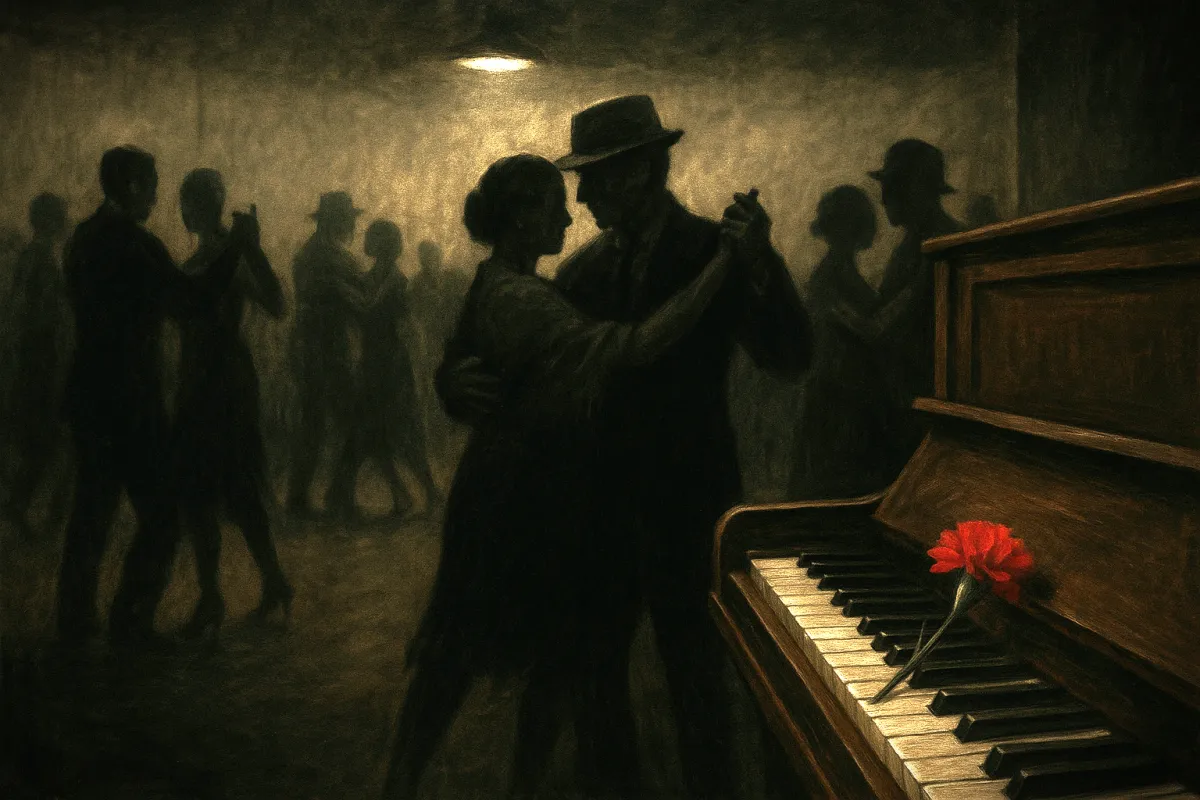
During Argentina’s most repressive years, tango didn’t vanish — it went underground. From banned lyrics to symbolic gestures like Pugliese’s red carnation, musicians and dancers found ways to resist through rhythm, poetry, and presence.
Northern Virginia's welcoming home for Argentine tango. Classes, workshops, milongas, and community.
Office: 303C Mill St NE, Vienna VA 22180
Email:[email protected]
Site: www.viennatango.com
Northern Virginia